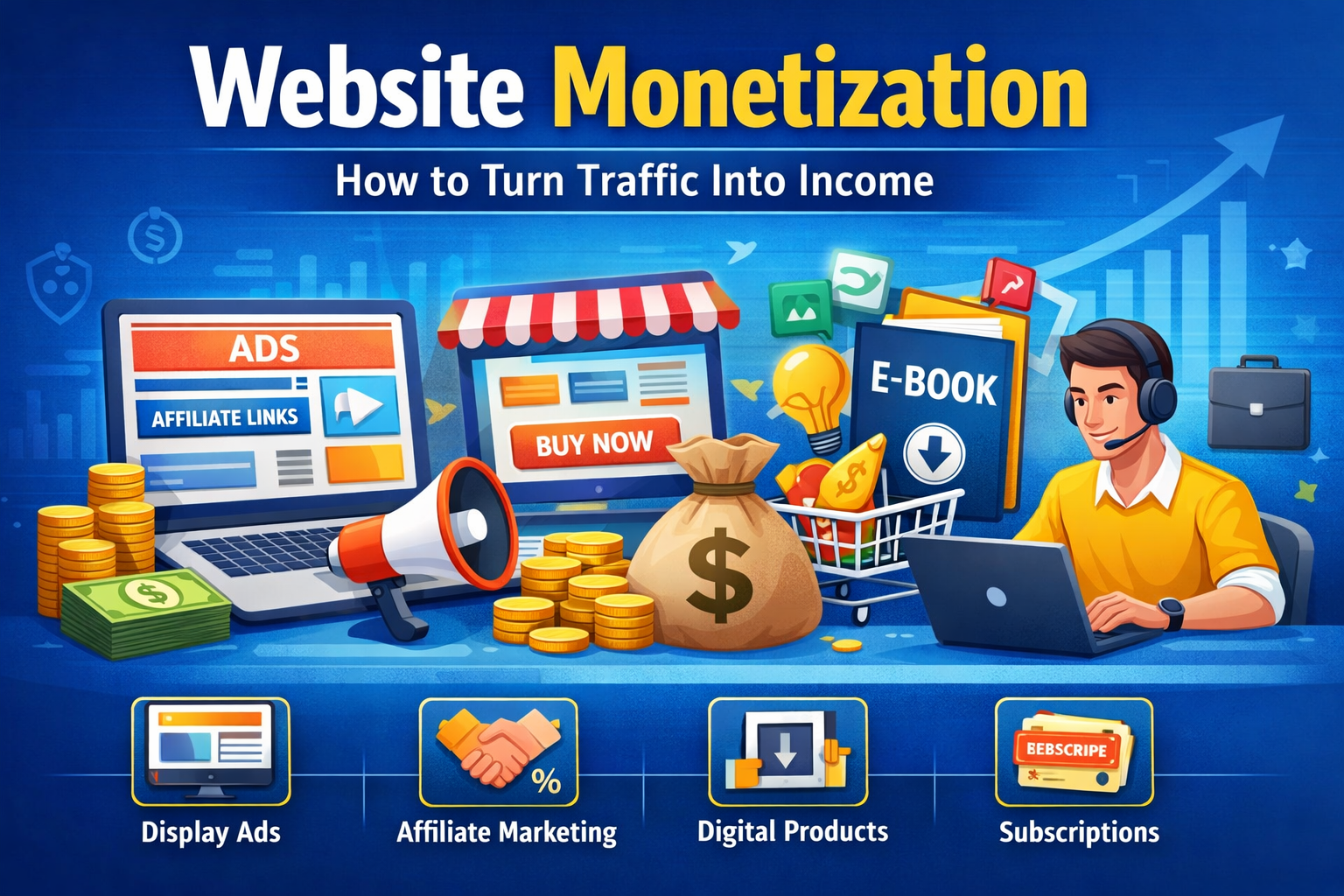
Introduction: Understanding Website Monetization
Website monetization is the process of earning money from the traffic that visits your website. Every visitor has value, and when monetized correctly, even a small website can generate consistent income. Many website owners focus only on increasing traffic but fail to convert that traffic into revenue. Successful website monetization bridges this gap.
Whether you run a blog, a niche website, or a business site, monetization allows you to turn your effort into financial returns. This guide explains practical and proven ways to convert website traffic into income without damaging user trust.
What Is Website Monetization?
Website monetization refers to strategies used to generate revenue from website visitors. These strategies depend on your niche, audience behavior, and content type.
Common monetization models include:
- Advertising
- Affiliate marketing
- Selling products or services
- Sponsored content
- Memberships and subscriptions
The goal is to earn while still providing value to users.
Why Website Monetization Matters
Website monetization matters because traffic alone does not pay bills. Monetization transforms your from a hobby into a sustainable income source.
Benefits of website monetization include:
- Passive income potential
- Business scalability
- Financial independence
- Better return on time and effort
For businesses, monetization also improves long-term growth and stability.
Understanding Your Website Traffic
Before monetizing, you must understand your audience. Traffic quality is more important than traffic quantity.
Key traffic factors to analyze:
- Visitor intent
- Page engagement
- Traffic sources
- Popular content pages
Understanding user behavior helps you choose the most effective monetization methods.
Website Monetization Through Display Advertising
Display advertising is one of the most common monetization methods. Website owners earn money by showing ads to visitors.
Popular ad platforms:
- Google AdSense
- Media.net
- Premium ad networks
Pros of Display Ads
- Easy to set up
- Passive income
- No product creation required
Cons
- Requires high traffic for good earnings
- Can affect user experience if overused
Ads work best for informational and high-traffic websites.
Affiliate Marketing for Website Monetization
marketing allows you to earn commissions by promoting products or services. You recommend relevant products and earn when users make purchases.
Affiliate marketing works well with:
- Product reviews
- Tutorials and guides
- Comparison articles
Best Practices
- Promote only trusted products
- Be transparent with disclosures
- Focus on problem-solving content
Affiliate marketing is one of the highest-earning monetization strategies.
Selling Digital Products on Your Website
Digital products give you full control over pricing and profits.
Popular digital products include:
- E-books
- Online courses
- Templates and tools
- Paid downloads
Once created, digital products can generate income repeatedly without additional production costs.
Website Monetization Through Services
Many website owners monetize by offering services related to their expertise.
Examples include:
- Freelancing
- Consulting
- Coaching
- Website or marketing services
Service-based monetization works best for authority websites and personal brands.
Sponsored Content and Brand Partnerships
content involves collaborating with brands to promote their products or services.
Sponsored monetization options:
- Sponsored blog posts
- Product mentions
- Banner placements
Brands pay for access to your audience, making this method profitable for niche websites with engaged readers.
Memberships and Subscription Models
Subscription-based monetization offers recurring income.
Common models include:
- Paid memberships
- Exclusive content access
- Community platforms
Subscriptions work well when your website offers ongoing value or premium content.
Email Marketing and Website Monetization
Email marketing supports monetization by building direct relationships with visitors.
Benefits include:
- Promoting offers effectively
- Driving repeat traffic
- Increasing conversions
An email list is one of the most valuable assets for long-term monetization.
Optimizing User Experience for Better Monetization
User experience directly affects income. Poor design or intrusive ads reduce trust and conversions.
Optimization tips:
- Improve website speed
- Keep layouts clean
- Limit excessive ads
- Focus on readability
Happy users are more likely to engage and convert.
Common Website Monetization Mistakes to Avoid
Many website owners struggle because of avoidable mistakes:
- Monetizing too aggressively
- Ignoring audience needs
- Relying on one income source
- Choosing irrelevant offers
Successful monetization balances income and user satisfaction.
Tracking and Improving Website Monetization Performance
Tracking performance helps identify what works best.
Important metrics include:
- Conversion rate
- Revenue per visitor
- Bounce rate
- Traffic growth
Regular analysis helps improve monetization strategies over time.
The Future of Website Monetization
monetization continues to evolve with technology and user expectations.
Future trends include:
- Personalized monetization
- Subscription-based content
- Community-driven income
- Ethical and transparent marketing
Websites that prioritize trust and value will remain profitable.
Conclusion: Turning Website Traffic Into Sustainable Income
monetization is not about quick profits—it is about long-term strategy. By understanding your audience, choosing the right monetization methods, and focusing on value, you can turn traffic into consistent income.
When monetization is done ethically and strategically, your website becomes more than just a platform—it becomes a business.
1 thought on “Website Monetization: How to Turn Traffic Into Income”